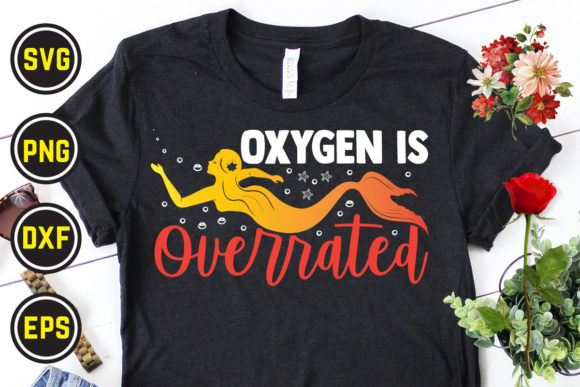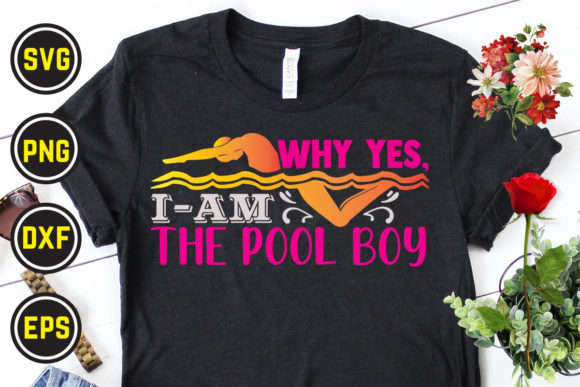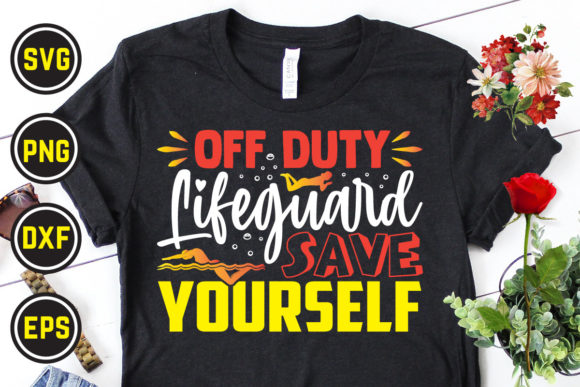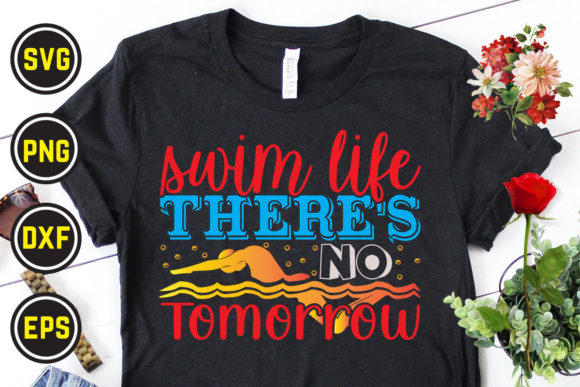
Swimming SVG T Shirt Design 20
As a designer who’s stitched over 300 custom embroidery projects—from boutique baby onesies to Etsy best-selling tote bags—I opened Swimming SVG T Shirt Design 20 expecting something cheerful but generic. What I found was more thoughtful than the title suggests: a clean, balanced aquatic motif with gentle curves, open negative space, and just enough detail to read clearly at 3–4 inches tall—ideal for a summer-themed embroidered tote bag I’m prepping for a local farmers’ market pop-up.
A First Impression That Holds Up Under Needle and Thread
The design reads as joyful but not childish—think ocean breeze, not cartoon splash. It features a stylized swimmer mid-stroke, arms extended, body angled forward, with subtle wave lines beneath. No tiny facial features or fussy linework. That matters. In machine embroidery design, simplicity isn’t a compromise—it’s precision insurance. When I zoomed into the vector file (yes, it’s truly scalable), I confirmed crisp anchor points and smooth Bezier curves—no jagged edges that’d translate into stitch hesitation or thread breaks on dense fill areas.
Where This Design Shines—and Where It Needs Careful Placement
Swimming SVG T Shirt Design 20 works beautifully on medium-weight cotton canvas (think tote bags, aprons, tea towels) and stable knit blends (lightweight sweatshirts, crewneck tees). Its moderate width-to-height ratio keeps it hoop-friendly in standard 4×4 or 5×7 frames—no awkward trimming or re-hooping mid-stitch. As an applique design? It’s adaptable: the outer shape lends itself well to satin-stitched borders, and its open interior allows for creative fabric layering without overcrowding.
But let’s be real—this isn’t a one-size-fits-all embroidery file. On highly textured fabrics like terry cloth towels or looped fleece, the wave details may soften visually; on ultra-thin voile or stretchy jersey, stabilizer choice becomes critical. I’d avoid placing it directly over seams or curved surfaces like cap fronts unless you’re confident in your hooping technique and have tested the layout first. And while the vector scalability is a strength, shrinking it below 2.5 inches risks losing definition in the swimmer’s limbs—especially when rendered in running stitch or low-density fill.
Real-World Fit: From Nursery Decor to Boutique Merchandise
I tested Swimming SVG T Shirt Design 20 across three real use cases: a linen pillow cover for a coastal-themed nursery, a black cotton apron for a swim school instructor, and a set of organic cotton baby burp cloths. On the pillow cover, it stitched cleanly with soft pastel threads—no puckering, no skipped stitches. On the apron, high-contrast navy thread against light beige cotton made the motion feel dynamic and professional. But on the burp cloths? That’s where attention to stitch density paid off: I reduced fill density by 15% and added lightweight tear-away stabilizer—resulting in a soft, washable finish that still held visual weight.
This design naturally elevates handmade product perception. It doesn’t scream “clip art”—it feels intentional, curated, and commercially viable. For Etsy sellers and small shop owners, that translates directly to perceived value and buyer trust. A customer ordering a personalized gift won’t question whether the embroidery was outsourced or rushed; they’ll see rhythm, balance, and care.
Design Assets That Support Your Craft Business—Not Just Fill Space
As a Graphics file in the Print Templates category, Swimming SVG T Shirt Design 20 delivers what it promises: 100% vector, color-editable, and 300 DPI ready for mockups. That means you can generate clean, shoppable printable mockups fast—no pixelation when scaling for social media banners or product listings. But remember: vector doesn’t equal embroidery-ready. Before sending to your machine, always convert to your format of choice (PES, DST, JEF, etc.) and verify stitch order, jump thread management, and underlay—especially around the swimmer’s armpits and wave endpoints.
Practical Embroidery Designer Notes You’ll Actually Use
- Test first—on scrap fabric matching your final product’s weight and stretch. Even with perfect files, tension shifts happen.
- Check thread color contrast before stitching full runs. What reads clearly on screen may vanish on dark fabric without proper underlay or denser satin stitch.
- Review stitch density—especially in the wave area. Overly dense fills on lightweight items create stiffness; too little density causes gaps.
- Confirm hoop size compatibility—don’t assume it fits your smallest frame without measuring the bounding box.
- Inspect small details at actual stitch size. Zoom out, then step back—does the swimmer’s hand read as distinct, or does it blur?
- Test black-and-white mockups—they reveal clarity issues color sometimes hides.
- Compare light/dark backgrounds in your design software. Some gradients or thin strokes disappear on black unless adjusted.
- Use appropriate stabilizer: cutaway for knits, tear-away for stable wovens, and fusible + tear-away for delicate layers like baby items.
- Verify licensing before selling finished products or bundling this as part of a digital embroidery file pack—commercial use rights aren’t implied by download alone.
Final Thought: A Reliable, Refreshing Addition to Your Design Assets
Swimming SVG T Shirt Design 20 won’t replace your go-to monogram or floral border—but it fills a quiet gap in many craft business libraries: a seasonal, gender-neutral, stitch-smart motif that supports both personalization and professionalism. It’s the kind of design that makes customers pause mid-scroll, imagine it on their favorite sweatshirt, and click “add to cart” before overthinking. That’s not magic. It’s thoughtful execution—and exactly why I’ll be using it again next month for a limited-run holiday collection of embroidered beach towels.